What to do when my implant moves?
A dental implant is an artificial titanium root, anchored in the bone of the jaw. Its stability is what makes it a long-term success. Yet an unusual movement is sometimes felt, either in the implant or in its crown. What to do about it depends on when it happens and on where it comes from.
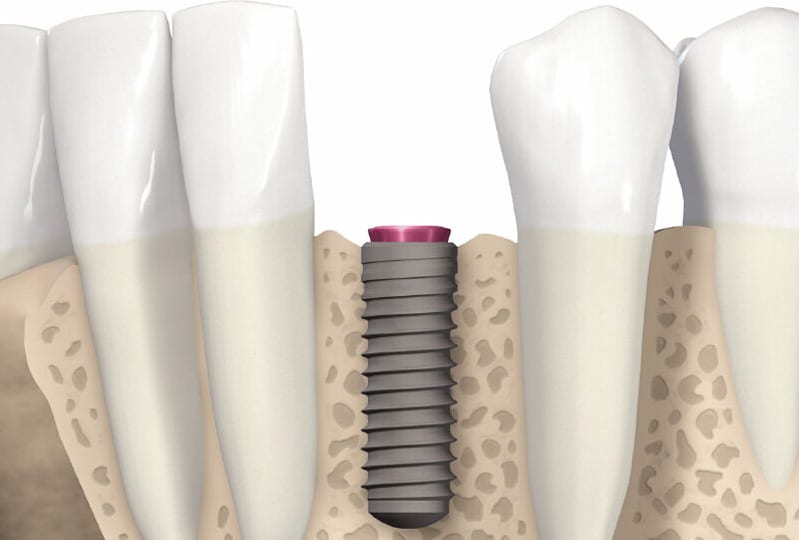

My implant is moving just after placement
Osseointegration, the process by which bone forms directly in contact with the surface of the titanium implant, takes 6 to 12 weeks on average, depending on bone quality, the site concerned and the surgical procedure. During and just after that period, two very different situations can explain a movement.
It is the healing screw
I have just had my implant placed, I am in the healing phase and I do not yet have the crown: the implant sits in the alveolar bone, and a small healing screw protects its threading. That screw keeps the soft tissues open while healing takes place and prepares the space for the future prosthesis, except when the surgeon deliberately chooses to bury the implant. During this phase the temporary screw can loosen, or even unscrew completely: brushing, chewing or the vibration of a motorbike is enough. The situation is harmless, with no consequence for the long-term prognosis of the implant. You should, however, contact your dentist promptly so that the screw can be put back in place, and the mucosa does not heal over the implant.
The implant has not osseointegrated
If, at the end of those 6 to 12 weeks, the implant shows any mobility, even minimal, that is unfortunately a sign of failed osseointegration. The reasons can be many: healing in soft tissue instead of bone tissue, infection, premature occlusal overload, poorly controlled diabetes, poor bone healing. In that case the implant has to be removed. This is not a definitive failure: a second implant can be considered later on.
Once the implant is well integrated
It is the crown that is moving
Once osseointegration is achieved, the prosthetic crown is fixed onto the implant, by bonding or by screwing. If a movement is felt at this stage, it is most often the crown that is moving, not the implant itself. Off to the dentist to secure it again.
A cemented crown coming loose. Some crowns on implants are cemented, that is, bonded in place with cement. This is no longer the recommended technique today, but it used to be: many crowns on implants are still cemented. Over time the cement can dissolve or fracture, and the crown comes loose. The dentist can usually re-cement it, after checking the condition of the implant and of the crown.
An unscrewed crown. There are implant systems in which the crown is screwed onto the implant. That screw can loosen gradually, in particular with parafunctions such as bruxism (teeth grinding), but sometimes simply through use: chewing, brushing, riding a motorbike. As in the previous case, the dentist tightens the screw, or replaces it if it is too damaged, and the job is done.
The implant itself is moving
If we get to this point, then unfortunately: game over. An implant that moves as a whole is most often the sign of peri-implantitis, often with pain. This is an inflammation and infection of the tissues that support the tooth or the implant. And yes: an artificial tooth still has to be cleaned. It will not develop a cavity, but the implant can be lost through poor hygiene or lack of follow-up, especially if you are prone to periodontitis. Peri-implantitis sets off a process that resorbs the bone around the implant; when the bone loss is too far advanced, the implant has to be explanted.
An implant can also move as a result of occlusal overload, a mechanism that causes aseptic de-osseointegration, that is, without any bacteria present.
Implant fracture
We finish with the rarest of all: fracture of the implant, at the neck or in the body. Here too the only way out is removal of the existing implant, and later re-planning of the replacement of the tooth if the patient wishes. This complication stays rare when the guidelines have been properly followed.
A loose implant or crown: when should you see a dentist?
See your dentist as soon as any mobility is detected, whether it concerns the screw, the crown or the implant. A precise diagnosis can then be made, and your dentist will offer you the best solution.
Care for this problem
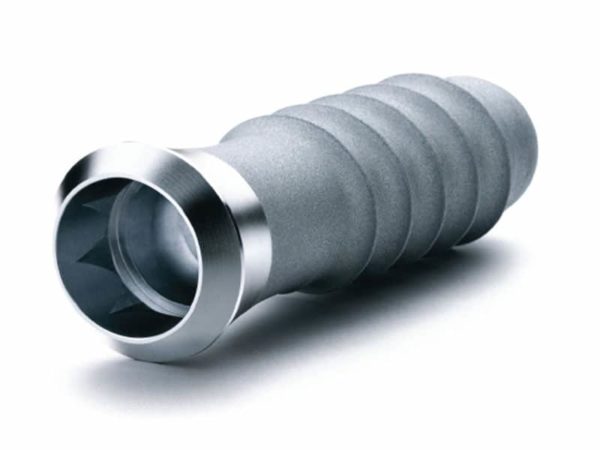
Dental implants
Fixed dentures
Gum treatment
Practitioners who can help with this problem